
Guide to Japan SEO, and How It Differs from Other Markets
As an SEO agency, we have been helping overseas companies with Japan SEO since 2015. And we have had many successes and failures along the way. During the last 10 years, I have attempted to write down notes, comments and clips regarding differences between Japanese SEO and English SEO.
In this article, I have gathered those insights into a clear, practical guide, so you can learn from the successes and failures we have experienced in the last decade here in Japan.
This guide lays out the key differences between English and Japanese SEO, as well as the key SEO differences between ranking in Japan versus ranking in The West. It will also help guide you on when a direct translation is sufficient, or when a Japan-specific solution is necessary to rank well for SEO.
OK, let’s get started.
What does it take to be successful with SEO in Japan?
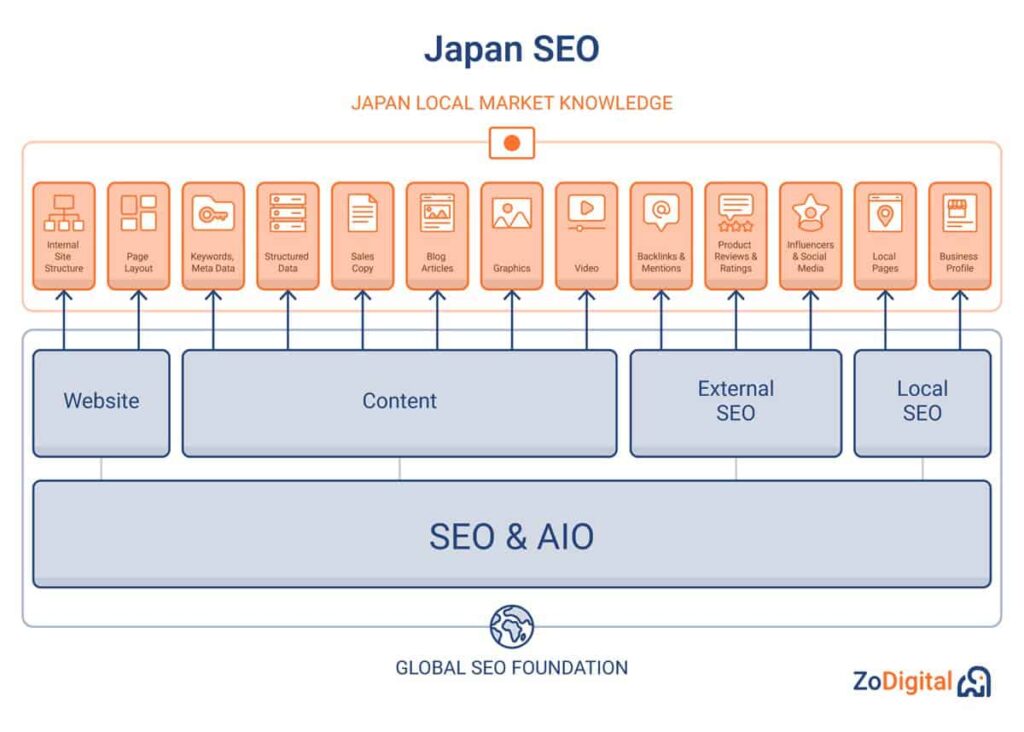
To be successful with SEO in Japan, your brand needs to start with a good global SEO foundation, then apply Japan local market knowledge.
Global Foundation
The global foundation includes both website, content and internal company processes.
To succeed anywhere in the world, your brand needs the following factors.
- A good quality website supported by strong technical SEO
- High Quality Content
- Strong External SEO factors such as backlinks, mentions, ratings.
- Local SEO, if you have local business locations.
In terms of how search engines rank content, these factors are pretty much the same worldwide. In the graphic below, these factors are represented by the light blue rectangle.
Japan Local Market Knowledge
However, to succeed in Japan you also need to apply Japan Local Market Knowledge and strategies. In many cases, customization or advanced localization is necessary. These items can be seen in the light orange rectangle in the graphic below.
Japan Local Marketing Knowledge includes the following factors.
- Modified Site Structure
- Modified Page Layouts
- Japanese Keywords and other Meta-Data
- Localized Structured Data
- Sales Copy
- Content including Blog, Graphics and Video
- Local Market Backlinks, Mentions and Citations
- Product Reviews & Rates
- Local Pages
- Business Profile
This can be best summed up in this graphic below.
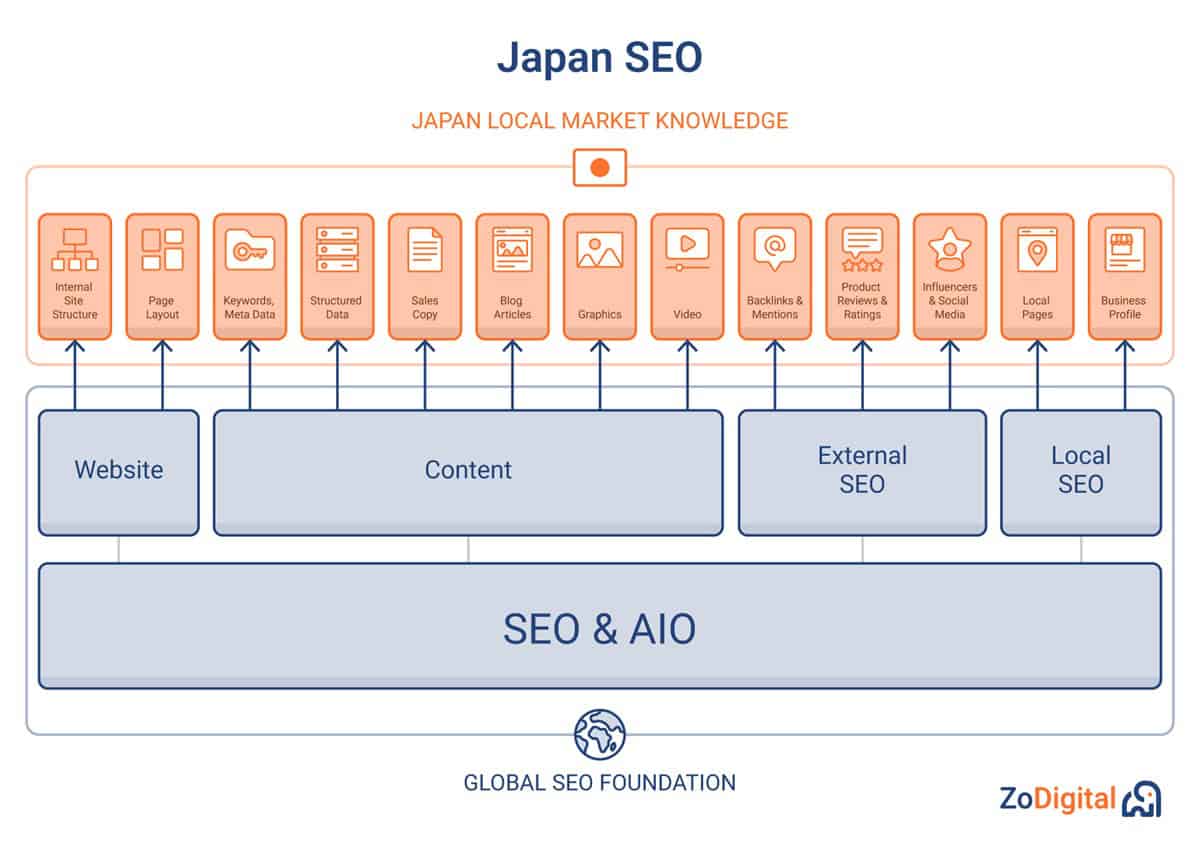
So while organic search (and AI too) algorithms are very similar to English as other languages, you need to apply this local market knowledge to appeal to the Japanese audience and have good rankings and organic search traffic.
The biggest mistake we see when brands try to enter Japan, is they just rely on translation instead of truly applying Japan local market knowledge.
For the rest of this article, we will focus on these specific custom actions your brand needs to take to be successful in Japan for SEO..
Is SEO the same in Japanese as English?
SEO is about 80% the same in Japanese as it is in English. SEO concepts like keywords, SERPs, Technical SEO, Branded Traffic, Non-branded traffic, EEAT, Good Quality Content, Titles & Meta-Descriptions, Backlinks & Anchor text and more, all these techniques and concepts apply in Japanese just like they do in English.
And these days, AI overviews (seen at the top of Google search results), as well as LLMs like ChatGPT function in Japanese about the same as they do in English.
However, Digital Marketers looking to enter the Japanese market with SEO need to take into account major differences in the following:
- Core Language Differences
- Search Intent Differences
- Regional or Geographic issues
- Cultural & Lifestyle Differences
- Business Culture Differences
- Information Processing Issues
- Website Issues
- Translation Issues
- Privacy Issues
- Laws & Legal Differences
- Local SEO Differences
Each of these factors affect Japanese “search patterns”, that, in turn, will affect your SEO campaigns as well as Paid Search campaigns.
And in many cases, the “searcher intent” may be significantly different in Japanese than in English.
A good amount of flexibility is necessary if you want to succeed in Japan. If you don’t take into account the above factors, and consider additional actions, you are likely to be outranked by more aggressive local Japanese companies or more savvy international brands.
This article will address those differences, and their implications to Japanese SEO.
What is The Most Popular Search Engine in Japan?
About Google
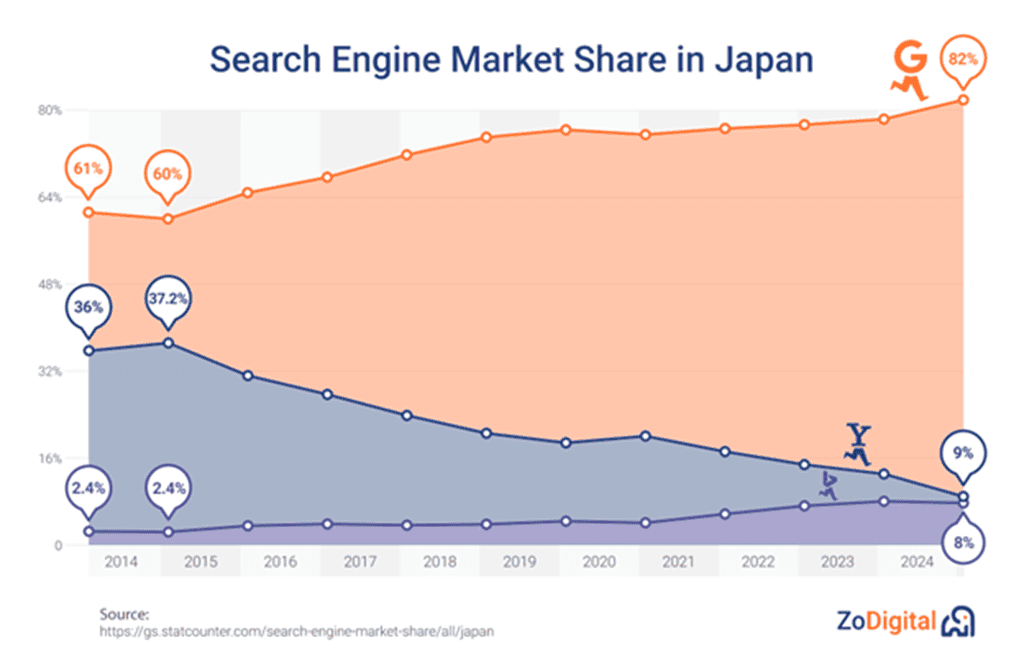
Before we start, let’s clarify what the most popular search engine is in Japan. Right now, that title goes to Google, with almost 90% market share.
If you also factor in YouTube, Google might have over 90% market share in Search.
For more information, please see our article and graphics on Japan Search Engine Marketshare.
About YahooJP
For many years, the number 2 search engine has been Yahoo JP. Surprisingly, Yahoo JP uses Google search engine internally. Astute users will notice that the core organic search results are the same. This can include PAAs (People Also Ask) as well as Related Searches.
However, Yahoo will add additional widgets such as a Twitter (X) feed, video feed, or sponsored ads. Google also adds features such as a Maps Pack for local searches.
For PPC/SEM, it should be noted that Yahoo JP uses a completely different Ads Console than Google, Some features of running ads in Google are not available on the Yahoo Ads Console. We may cover this in an upcoming article.
It should be noted that Yahoo in Japan is 100% owned by Softbank, and is no longer owned or connected by Yahoo in the USA.
About Microsoft Bing
With the increasing popularity of ChatGPT & Copilot, we have seen the rise of Microsoft Bing as a search engine. It made a bit of a comeback in 2025, and is now challenging Yahoo JP for the #2 position.
Effect of AI on Japanese Organic Search
As I write this in late 2025, LLMs like Chat GPT are gaining traction in Japan. At the same time, AI Overviews (AIOs) are causing zero-click searches, and are reducing traffic to Japanese sites. In this environment, citations (links) are becoming more important, and search rankings are becoming less important. We will follow up with an article about Search AI in the near future.
One trend we noticed recently is that LLMs are able to break the “language barrier”, and easily pull out data in a different language than the user’s query. This will have a profound impact on Japanese searches in the future. I will provide more info in an upcoming article.
Next, let’s move on and talk about the key differences between Japan SEO and English SEO.
Core Language Issues
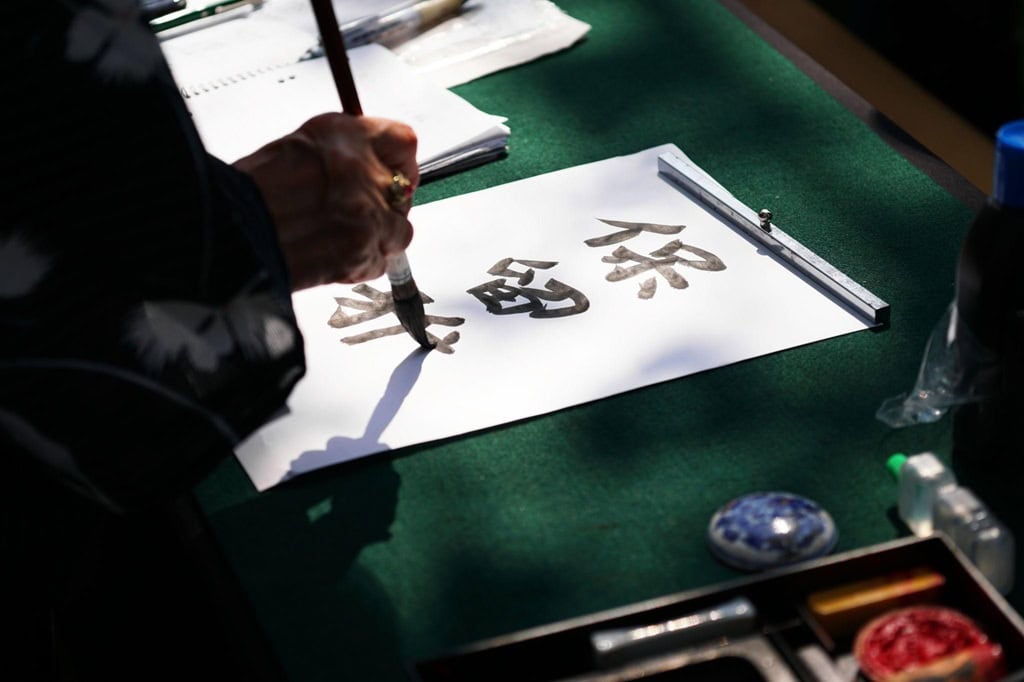
Here we will cover basic language constructs, and highlight how each relates to Japanese SEO.
3 Different Scripts
Written English is a rather simple language, with 1 script containing only 26 characters, A through Z. However, Japanese has 3 different scripts.
- Hiragana – 46 base characters, 71-74 characters total. Often, the first script Japanese kids learn in school. Each character represents a phonetic sound in Japanese.
- Katakana – 46 base characters, 71-74 characters total. Similar to Hiragana, each character represents a phonetic sound in Japanese. Katakana is often used to phonetically sound out foreign words.
- Kanji – More than 10,000 characters. But about 2,000 common characters (Joyo Kanji) are needed to read a newspaper. Graphically, Kanji characters tend to have many more strokes compared to the simplified Katakana and Hiragana characters.
There is also Romaji, which is helpful for foreigners learning Japanese. Most Japanese can read simple romanized words like “Osaka”, but would struggle to read an entire sentence in Romaji.
Here is an example of a Japanese sentence.
Japanese:
昨日、コンビニでおにぎりを三つ買いました。
English translation:
Yesterday, I bought three rice balls at the convenience store.
👉 This sentence includes:
- Kanji: 昨日 (yesterday), 三 (three), 買 (buy)
- Hiragana: で, おにぎり, を, ました
- Katakana: コンビニ (convenience store)
Keep in mind words or entities can be expressed in anyone of 4 different Scripts. Consider the word for “Tokyo”.
- とうきょう – Hiragana
- トウキョウ – In Katakana
- 東京 – Kanji Characters
- Tokyo – In Roman characters (called Romaji)
Many times, there may be multiple ways to represent a product or service. Consider the case for “Additive Manufacturing” in Japanese. Many multilingual websites just use the phoneticized translation in Kanakana アディティブ・マニュファクチャリング. Many in the industry also use the abbreviation in Roman characters “AM”. But some searchers may also use the more rare Kanji Representations such as 加法製造, 積層造形 or even 付加製造. You need to make sure you have these terms covered as well.
Note, we use the phrase “Roman Characters” in the article. But the more technically correct term is “Latin Characters”.
👉Implications for search
These days, search Engines are intelligent enough to understand entities written in the 4 different scripts. However, you should still use Keyword Research to understand what term Japanese use most often to express a particular word or term. Make sure your website has all translations of a particular term included in the text. For each page, make sure the most strategic KW is prominent in titles and introductory text.
Reading of Kanji Characters
As mentioned, there are over 10,000 Kanji characters, 2000 used in everyday Kanji. To make things even more complicated, each character may have multiple “readings” or phonetic pronunciations. The character reading can be based on either the original Chinese “On-yomi” reading, or the adapted “Kun-yomi” when the character’s meaning was adapted to the Japanese language.
Here is an example where things can go wrong with mixing character readings. Close to where I live is the “Hisagi” area of Zushi. This Kanji is written as 久木. However, most Japanese who are not from this area will read that location name as “Kuki”, not “Hisagi”.
👉Implications for search
For translation purposes, if Kanji reading is not clear, your website will need to provide phonetics.
No Spaces Between Words
For students of Japanese like me, one of the more frustrating aspects of the language is that Japanese has no spaces between words.
Concepts like “word breaking” become much more important than other languages. To effectively find the boundary between words, search engines need to know the Yomi-kata or “reading” of such words.
As a humorous example in English, my sister (who is a certified family therapist), pointed out the problem of registering the domain Therapists.com. Sounds like a great idea. But, with no spaces between words the domain name could also be interpreted as TheRapists.com. 😱
Japanese has a similar issue since it has no spaces between words.
E.g.
1. ここではきものをおぬぎください
It can be understood in both ways:
- ここで、履き物をお脱ぎください (Please take off your shoes here.)
- ここでは、着物をお脱ぎください (Please take off your kimono here. 😱)
2. きのうはいしゃにいった
It can be understood in both ways:
- 昨日、歯医者に行った (I went to the dentist yesterday.)
- 昨日は、医者に行った (I went to the doctor yesterday.)
The examples above might show up more during spoken Japanese. If your website is subject to voice search, you may need to consider this issue.
There are also similar issues when 2 Katakana words are juxtaposed together, making the reading of those 2 words difficult to read by both search engines and humans.
In addition, Japanese has many spoken “particles” that are not really words, but have characters or are spoken. A simple example is the question particle placed at the end of question sentence, “Ka” (か). Would you count particles as a “word” in Japanese? The result is there is no good quantifiable way to measure “words” in Japanese. You must use characters instead.
👉Implications for search
Japanese search engines are still intelligent enough to parse full sentences into individual words and entities. However, some supposed SEO metrics like “words” have no meaning.
When reviewing website translations, please take care when works the sit next to each other may be hard to read, or have different meanings.
Utilizing Spaces on Search
When searching Google and other search engines, Japanese users tend to omit particles, and search using keywords only. And this effect is compounded by Google’s “search recommendations” as the user is typing. We can see from the example, sometimes keywords include spaces, sometimes not.
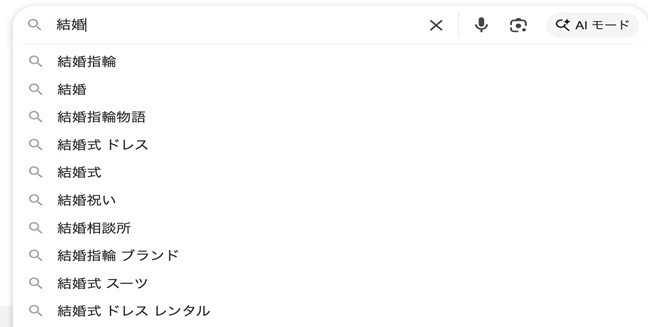
However, the insertion of spaces can lead to different meanings, which leads to different search intent. Here are some examples.
食事会 服 (dinner party clothes)
With keywords alone, it can mean either:
- I want to buy clothes to wear to a dinner party.
- I want to know appropriate dress etiquette for a dinner party.
In actual SERPs, content on dress etiquette and outfit suggestions is needed.
結婚祝い (wedding gift)
Keywords alone can imply:
- I want to know the meaning, origin, and history of wedding gifts.
- I want the best wedding gift.
- I want information on budgets and etiquette.
The entries for this keyword are mixed, but users mainly look for gifts (3).
Word order can also change nuance.
- 写真 インスタ映え (Photos Instagrammable)
→ I want to know how to take Instagrammable photos. - インスタ映え 写真 (Instagrammable Photos)
→ I want to see Instagrammable photos.
Strictly speaking, the nuance is different, but Google often treats (1) and (2) as the same keyword and shows the most in-demand content.
However, some combinations can change the meaning:
- 友達 映画 (Friend movie) → A movie titled Friend.
- 映画 友達 (Movie friend) → Mixed interpretations of 1 and 3 in SERP.
- 映画友達 (Movie friend) *No space → A friend who likes movies (Insights: how to make a friend with the same hobby).
👉Implications for search
When analyzing Japanese keyword research, you will need to think carefully about whether a particular keyword has spaces versus the non-space variant. Also, similar to English, you will need to be careful about word order of particular keywords.
How Many Japanese Characters in an English Word?
Clients have asked us before, if we have a 1000 word article in English, how many characters would that be in Japanese?
The answer is not so simple, as a single sentence can go through expansion or contraction of text based on the terms used. However, we did testing of some well translated articles, and found that 1 English word roughly equates to about 2.5 Japanese characters.
So if you have a 1000 English article, all things considered, it will likely be translated into a 2500 character Japanese text.
👉Implications for search
When paying writers to create content, rates are usually pay-per-character rather than pay-per-word.
Search Intent Differences
In many cases, the search intent of a translated English word may be completely different from the search intent of the equivalent word in Japanese. This can lead to misunderstandings and poorly performing search results.
Vocabulary Expansion
In many cases, 1 word or term can be represented in multiple ways in Japanese.
To have comfortable fluency in English, you need to know 5000 – 6000 words. To have comfortable fluency in Japanese you need to know 8000 – 10,000 words. Many more words are required in Japanese.
As an example, let’s consider the word for “Customer Experience” in Japanese. I can think of 3 translations, each of which has the same meaning. And might be used interchangeably by Japanese.
Example (Kanji, Katakana, Romaji)
- Kanji – 顧客体験 (1.7 K)
- Katakana – カスタマーエクスペリエンス (2.8K)
- Romaji – CX (16K)
All are essentially variations of the same meaning.
👉Implications for search
It is necessary to do keyword research in native Japanese to understand all the ways a word or term can be expressed.
Examples of Search Intent Differences
In many cases, the search intent of Japanese may be significantly different than that of a translation English search. Let’s look at some examples.
Some “garaigo” (non-Japanese words) have different meanings than English, or are much more popular in Japanese.
In addition, some Keywords have phrases that English speakers may not understand
- リスキリング ⇒ Reskilling. “Training for a new job category”
- アルバイト ⇒ Arubaito. “temporary job”, adopted from German, not English
- コンセント ⇒ konsento. “Consento or electrical wall outlet” not “Consent”.
- マンション ⇒ Manshon. “Concrete condo or apartment dwelling”, not “Mansion”.
Comically, パンツ ”pants” means “underwear”. This can become a big mistake when talking to your partner’s parents for the first time.
“DX” (in Roman characters) means “Digital Transformation” to Japanese speakers. This was an ongoing topic in Japan over the last 20 years as companies have struggled to replace paper-based processes.
Some words might have the same meaning in English, but have subtle or significantly different meanings in Japanese. This means that Search Intent can easily be misinterpreted. Consequently, targeting Keywords like this with the same landing page may make your offering uncompetitive.
For example, consider these 2 keywords, both translate to “Sales Strategy” in English.
営業戦略
販売戦略
However, when comparing the Search Results pages, we see very different results.
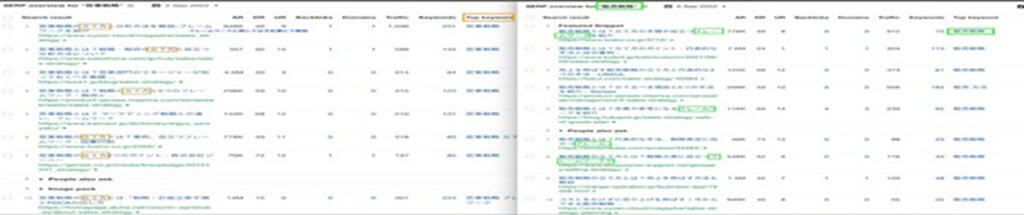
To effectively target both of these keywords, you will likely need separate pages, even though they might be considered the same in English.
Other examples
- 弁護士 vs 司法書士 for attorneys
- 大工 and 建具 for house construction.
If your website is just a direct translation of English, you will have a difficult time ranking for these types of keywords in Japanese.
EN Search Intent vs JA Search Intent
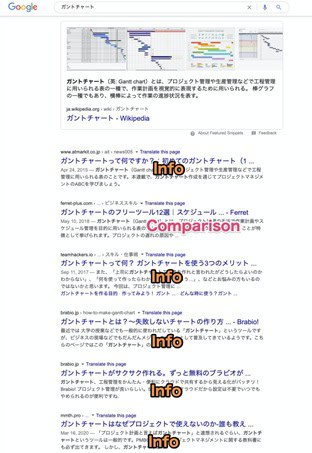
One mistake we see when skipping Keyword Research in Japanese is this. Quite often, the search intent in Japanese may be significantly different than the search intent in English. This is true even for terms that have existed for decades.
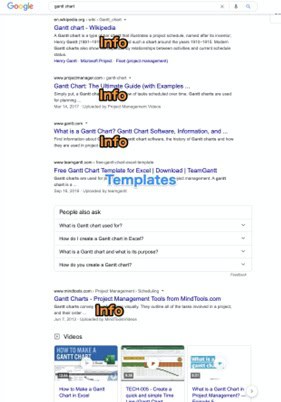
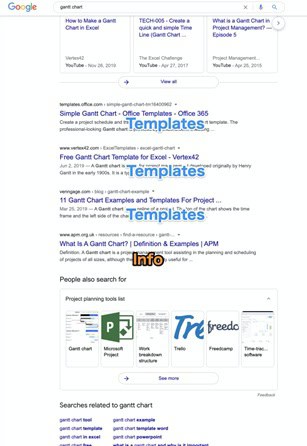
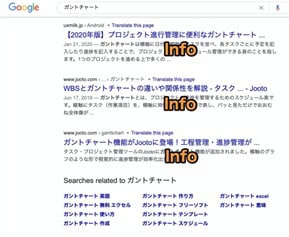
Consider this example: “Gantt Chart” in English versus ガントチャート “Gantt Chart” in Japanese.
In American English
Notes
- 5 out of 10 Entries are Informational articles
- 4 out of 10 Entries are Templates
In Japanese
Notes
- 8 of the Top 10 are Informational articles.
- 1 of the Top 10 is a tools comparison article.
As you can see in this example above, even though the keyword is basically the same, the search intent of the Japanese audience is significantly different from the American English audience. In general, most American searchers already know what a Gantt chart is, so when they search, they are more likely looking for Gantt chart templates. While Japanese searchers are more looking for information about Gantt charts. This is a big difference in intent if you are trying to rank for this keyword.
👉Implications for search
Don’t assume the same search intent for Japanese. You need to look at Search Results pages carefully to truly understand Japanese search intent.
Word or Name Concatenation
If a well-known person’s name or brand name becomes a household word, they will often concatenate the term in SMS messages or when searching. Here are some common examples:
- Scarlett Johansson becomes スカラヨハ “sukara-yoha”.
- Starbucks becomes スタバ “sutaba”.
- Kimura Takuya (Japanese actor) become キムタク “Kimu-taku”.
👉Implications for search
Once again, this can affect search patterns and how your brand is perceived. In particular, you may see these contatenated terms show up in mobile searches. Keyword research is important.
Search Engines as Translators
Japanese people often use search engines as translators. They may use a search engine to translate an English word to Japanese.
- DX 日本語
- Meaning: Translate “DX” into Japanese
Or they may use a search engine to translate a Japanese word to English
- もったいない 英語
- Meaning: Translate “mottainai” into English
👉Implications for search
These keywords can affect Japanese search patterns. Also keep in mind that the user is just looking for a simple translation. For the last example above, writing a “Guide to Mottainai” is most likely not meeting the searchers’ intent.
Regional Or Geographical Issues
Japan is an Island Nation
Japan is an island nation. It has no land-based borders with neighboring countries. As such, phrases like “inbound” and “outbound”, or even “Inside” and “outside” are frequently used in the language. The most common example is word for foreigner, 外人 or 外国人, the Kanji literally means “Outside Person” or “Outside Country Person”.
This can sometimes lead to confusing phrases like “Inbound Marketing”. In Japanese, this term means marketing to people inside of Japan.
Japanese Spoken Primarily In Japan
The Japanese language is primarily spoken only in Japan. So when searching for English words inside of Japan, it may lead to Japanese specific results.
Japanese names imply Domestic Searches
When searching for something in Japan, you don’t need to specify the country. It is implied the country is Japan.
Foreign location names are usually written in Katakana (except Chinese-character names), so it is fairly easy for search engines to understand the implied location.
Other Geographical Names or Terms
Some other geographical terms can affect search patterns.
- For typhoons, Japanese use numbers each year starting with Typhoon #1, whereas other countries use names, even for the same typhoon.
- Bodies of water. Japanese refer to the “Sea of Japan” whereas China calls it the “East Sea”
- Islands: Japan will use Japanese names for islands bordering Korea, China, & Russia.
Units of Measurement
In Japan, certain units of measure are different from those of the USA or Europe. While Japan mostly follows the metric system, there are some notable exceptions.
- For Real Estate property listings
- One “tsubo” is equal to about 3.3 square meters. It is used for house and property size measurements.
- One “Jo”, refers to the size of 1 standard tatami mat. It is used for room size or area measurements.
- And 1 square meter is often expressed as “heibei”.
- One “Shaku” is about 30.3 CM, and is often used in carpentry or kimono making.
- One “Koku” is about 180 liters, a measurement used in the sake industry, as well as a way to measure wealth in rice in feudal Japan.
- One “sho” is about 1.8 liters, and is still used for sake bottles.
Depending on the field, these differences in units of measurement can affect search patterns.
Cultural or Lifestyle Differences
There are many documented cases where Japanese culture or lifestyles are different from the West. We don’t try to document all cases here. Instead we will just touch on a few. Each case below can strongly affect search patterns for your business.
Group Oriented Culture
It’s generally accepted that Japan has a collectivist or group oriented culture. People will often emphasize the importance of the group, as opposed to the more individualistic orientation in Western culture. See the Business section for more on this topic.
Awareness of Space
Japan has a population of roughly 123 million people, compared to the USA which has 347 million people. That is about one third of the US population. The total area is 377,975 km² (145,937 sq mi), which is about the size of California.
However, 67% of the land in Japan is considered unlivable due to steep mountainous terrain and forests.
The net effect is the cities are super-crowded, and “space” is considered a very scarce resource. Here are some examples Japan is known for:
- Narrow and crowded roads
- Crowded trains, where attendants need to push people in to shut the doors. (although the problem has gotten much better over the last 30 years).
- People living in small apartments. A family of 4 can easily live in a 70 square meter (750 sq feet) apartment.
- Japanese tend to throw things out, or recycle soon compared to the West. They don’t have space to store things long term.
👉Implications for Search
This emphasis on space can affect search patterns.
- For an EC site, it is necessary to clearly display product dimensions, and show use cases in a Japanese home or apartment.
- For automobiles and other vehicles, once again, you need to show dimensions, and know cars with retractable rear view mirrors are popular here.
- For home living, Japanese will generally prefer smaller sized things than their western counterparts.
Privacy
Japanese have a very high respect for privacy, and will take extra steps to protect it.
There are also strong privacy laws in Japan that can restrict outreach activities such as Inside Sales or Link Building.
An interesting sidenote, Japanese tend to favor avatars over showing their personal photos.
Twitter (now called X) is a very popular social media platform in Japan. Users can still be anonymous, but build a fan following, and many are comfortable with speaking their opinions on the platform.
👉Implications for Search
Expect to see more “incognito” or “private search” sessions. Retargeting may be more difficult, and if you successfully acquire their email address, it will likely be to a burner account. More anonymous services such as Twitter are much more popular than named services such as Facebook.
Expectations of Quality
Japanese have very high expectations for quality products. When entering Japan, foreign brands need to go out of their way to show their products will last.
For new foreign brands, many Japanese have longevity concerns and will have doubts about “how long you will stay in Japan”. Anything you can do to overcome those doubts, will provide benefits in conversion rates.
On the flip side, many foreign brands that have established high quality credentials have enjoyed premium margins in Japan. Brands like Louis-Vitton, Mercedes Benz, LeCruset, and Dyson fall into this category.
Note, there are a number of exceptions to this “quality” rule in Japan. In particular, I am personally disappointed with the quality of new houses here. They are often built with flimsy materials and not expected to last more than 30 years. Another example is cheap mens business suits.
👉Implications for Websites and Search
Websites need to provide proof that they can deliver high quality products and services for Japanese people. They also need to provide proof that they are here for the long term. Social proof and trust are two really important factors in Japan.
Expectations of Customer Service
In the West, we might say the customer is “King”. But in Japan, there is a saying that the customer is “God”. While standards are coming down, Japanese still have a very high expectation of customer service. CS representatives need extensive training. Moreover, they need to speak “Keigo”, or honorific language, when addressing customers. Yes, the language has different verb endings based on politeness.
The better companies might have a Tokyo based “03” number and an Osaka-based “06” number for those who prefer to speak in Kansai dialect.
👉Implications for Websites and Search
It is essential to clearly state how to contact support. Make it clear that a Japanese person will answer the phone or email and take care of them. A picture of a Japanese staff member with a headset really helps. Having a “06” number for people living in the Kansai area also helps build trust with your online users.
Eating Out & Eating In
Living in small boxes, and performing long commutes, Japanese tend to spend less time in their house. Company employees often eat dinner with coworkers after work. Housewives will have lunch together. Restaurants are cheap and the food quality is good, and tipping is not expected. In addition the government gives out favorable tax rates for staff who expense meals.
While big-box stores like Costco do exist in Japan, very few Japanese have a big SUV or even have space to store bulk food in thier house. When eating in, Japanese housewives tend to shop daily for food. Small amounts of leftover food are stored in the small refrigerators.
Business Cultural Differences
In the above section we discussed general cultural differences between Japan and The West. In this section, we will shift focus to business differences. Many of the cultural differences above also apply in the business world. It is hard to keep the 2 separate.
Relationship Based Business Culture
Japan has a very relationship-based business culture. By comparison, Western business culture is seen as more of a task-based business culture.
Let’s discuss how this might apply to search. In Western culture, a user is likely to do a search on a particular keyword, review the top-10 websites, then pick 3 of them to contact. Based on the responses they get, they will pick one of the 1 based on factors like cost vs performance.
By contrast in Japan, instead of searching, a Japanese user might reach out to 1 or 2 of their friends or business partners, and ask them for a “recommendation”. Their contact may personally introduce them to their potential business partner. While the recommender has a lot of power, they also have a lot of “responsibility”. They may need to get actively involved if the relationship they suggested goes bad. They want to protect their own reputation.
👉Implications for Search
For the B2B space, expect comparison searches to be lower search volumes compared to The West. However, when Japanese search, they truly need help. Thus they are likely to convert better.
Big Brands Still Dominate
While Japanese still respect up and coming brands in their niches, such as OpenAI, in general big brands still rule in Japan.
Japan has a very risk-adverse business culture. So selecting a well known Japanese brand is seen as a “safe choice”.
To succeed in Japan in the B2B space, you need to score some early successes, and turn those into case studies. They promote your success in Japan and abroad to other sales prospects.
👉Implications for Search
If you find yourself competing against a big brand, consider “niching down” and targeting long-tail keywords instead of going head to head.
Japanese Information Processing Issues
In this section, we attempt to document some of the information processing issues with Japanese, as they relate to SEO and SEM.
For a more comprehensive and detailed explanation about Japanese information processing, we recommend Dr. Ken Lunde’s excellent book, CJKV Information Processing.
Text Rendering Issues
Kanji characters can often be much more complex than English characters. Consider the Roman alphabet used by English. The letter “W” might take 4 strokes if written traditionally. For Kanji characters, many of them have 20 strokes or more. The characters are more complex, and take more space to write them accurately.
If you try to render Japanese characters in small font sizes, say 12 point or smaller, in many cases strokes will be combined, and those characters will become unreadable.
In English, many website designers like to use gray text. It often looks beautiful. However, when translated to Japanese, the complex strokes of Kanji characters often become hard to read for the Japanese audience, and can cause eye fatigue.
👉Implications for Translations & Search
- When doing translations, be prepared for text expansion or contraction
- Must display all Japanese text 14 point font size or greater.
- Don’t use gray text colors, use black instead
Not following these guidelines will result in lower engagement rates, which ultimately leads to lower rankings.
Multiple Character Encodings
In the old days of Japanese information processing, the major platforms had different encodings
| Encoding | Era / Use Case | Key Traits | Status Today |
| Shift-JIS | PC, Windows (1980s) | Compact, ambiguous | Legacy |
| Shift-JIS (Mac) | Mac (Pre OSX, 80’s & 90’s) | Compatibility issues | Legacy |
| EUC-JP | Unix/Linux (1980s) | Cleaner than SJIS | Legacy |
| ISO-2022-JP (AKA JIS) | Email (1990s) | Escape sequences | Legacy |
| UTF-8 | Web & apps, Mac OS (2000s–) | Universal, safe | Standard |
| UTF-16 | Windows, Java | Fixed 2 bytes (mostly) | Still used internally |
However, with adoption of the Unicode Standard in Japan, UTF-8 seems to be the standard for encoding on Japanese websites.
While Japanese has historically been viewed as a 2-byte or double-byte encoding, the reality is UTF-8 is a variable encoding. A single character can be encoded as 1-byte, 2-bytes, 3-bytes or even 4-bytes of data. This can lead to storage expansion issues.
These days encodings are not such a big issue as in the past. Japanese search engines are able to easily transcode to a common encoding, and locate the right terms.
👉Implications for Search
- Use UTF-8 for encoding text on Japanese websites.
- Be wary of text storage expansion issues. Plan for 2x more storage.
Half-Width and Full-Width Spaces
While blank spaces are rarely used in written Japanese, they sometimes show up in search terms, and other places. Spaces in Japanese can be half-width (single byte) space used by English and other Latin languages. But spaces can also be full-width spaces (double byte).
Occasionally, Japanese will use the center dot character ・ to separate katakana words (like names) so the words can be more easily read.
👉Implications for Search
When searching, whether the user uses 1-byte spaces, 2-byte spaces, or no spaces at all, the search engines are able to correctly deal with the term.
Japanese Slug Names
A “slug” is often referred to the file path after the domain.com section of the URL.
For example, for this URL: https://www.zodigital.jp/blog/guide-to-link-building-in-japan/
The slug is: blog/guide-to-link-building-in-japan/
About 10 to 15 years ago, clever SEOs could make the slug to be native Japanese text. So the slug would become something like:
ブログ/リンク構築ガイド/
The whole idea is to optimize the slug for the target keyword.
While this technique may have worked 10 to 15 years ago, these days, so many other factors are more important than keywords in the Slug.
Adding Japanese to the slugs has one big negative factor. Due to encoding issues, it makes your sightmaps almost unreadable. The bigger your site gets, the more this eats up your SEO consulting time just trying to maintain the site map.
As an example, you can look at the Japanese page for PPC advertising on our site at Zo Digital Japan. The note how URL slug part is written in Japanese.
https://www.zodigital.jp/ja/リスティング広告/
However, the technically correct way to encode the URL is this way.
Is that readable? No. Is it technically correct? Yes.
This leads to 2 URLs the specify the exact same webpage.
This problem compounds when you have a sitemap of URLs encoded in Japanese. It becomes not readable by humans.
These days, most native SEO driven Japanese-only sites use Romaji characters in their file-path names (slugs).
👉Implications for Search
When creating a website, keep things simple and don’t create Japanese slugs (file paths).
Website Issues
Trust and Social Proof
When viewing a website, many Japanese ask psychologically, “is this a service that people use in Japan? Are they happy with this product or service? Or, is this just a simple Japanese translated website trying to sell a few products in Japan?
Trust and Social Proof are 2 of the most important factors to consider when launching a website in Japan. Here are ways your website can demonstrate these 2 factors.
- User Reviews from Japanese people
- Links to Social Media Posts
- Certifications
- Testimonials from real Japanese users
- Case studies from real Japanese customers
- Quality examples
- Work history of Japanese Directors
- Company Registrations, Addresses, Phone numbers
Japanese will search the web for these trust markers before engaging with your brand.
Lead Capture on Japanese Websites
When presented with a form to capture a lead, most Western Companies will request the following fields
- First Name
- Last Name (AKA Family Name)
- Company Name
- Phone number etc…
The problem is the way Japanese names are written and stored. THere are 2 problems that many international websites overlook.
- In Japanese, the family name comes first. So the form layout needs to be changed to reflect this difference.
- In Japanese forms, just capturing the users name in Kanji characters is not enough to ensure correct pronunciations. There are many famous cases of support people mispronouncing the user’s name leading to a poor customer experience. So there needs to be an extra 2 fields to correctly capture the phonetics of the customers’ name.
Not making these changes to your Japanese website might get your brand publicly ridiculed on Twitter, or other message boards. You want to avoid the “wall of shame” in Japan. It is hard enough to succeed in Japan. Don’t make it any harder.
Website Performance Issues
While not directly related to SEO, any website performance or layout issues become SEO rankings issues as Japanese users avoid your site and visit more Japanese friendly sites.
Many times, Japanese localized websites tend to have poor performance, characterized by slow page load times and poor performance metrics as defined by Google.
From our experience, the poor performance often relates to 2 issues.
- Fonts. As Japanese requires multi-byte fonts, many times these fonts are heavy (1 to 2 MB), and require a download in order to render the page. If possible, we recommend using the system font by the computer or browser to avoid unnecessary font downloading.
- Images. In the process of localizing images, the localization team forget to resize and compress images, resulting in fat images followed by slow page load times. Sometimes this happens with blog featured images. And the problem is compounded by the fact the featured images are often shown on the homepage, thus slowing it down too.
Website Technical SEO Issues
While general technical SEO problems such as broken links, incorrect canonical tags, etc affect your site’s Japanese SEO the same as your site’s English SEO. So we won’t rehash these issues. Instead, we will focus on Japanese specific technical SEO Issues.
SEO Titles and Meta-Descriptions
As a result of the issues above, Japanese search engines such as Google often have limitations on how many characters they will display in the SEO Title and SEO Description (AKA SEO Meta-Description) fields.
The actual size is a pixel based limitation, and not a character count limitation, in general you can only display half as many characters in the SEO Title and Description.
Also keep in mind that the number of characters displayed in these fields is less on Mobile devices compared to Desktop devices.
For more information, please refer to our article about Japanese SEO Title and Meta-Descriptions here.
Use of Separators in SEO Titles
One more thing for SEO Titles. In English websites, authors often use a dash “-” to separate brand name from page title, such as:
Zo Digital Japan – The Top Bilingual SEO Agency in Japan
However, that dash looks too much like the Katakana “ー” character that is used in many Katakana words. This can lead to confusion. As a result, the accepted practice for Japanese SEO Titles is to use a vertical “pipe” character “|” to separate brand names.
Zo Digital Japan | 日本で最高のバイリンガルSEO代理店
Redirecting Users Based Browser Language
Many websites try to get crafty, and redirect users based on their IPAddress (country = Japan), or by the Browser Language String (language = Japanese). On the outset, this may seem like a good idea. After all, if you have a global website, why not direct Japanese users to a Japanese page?
Don’t do this.
The problem is while redirecting users, you are most likely redirecting the Googlebot. Keep in mind the Googlebot will visit your site from the USA (Mountain View CA). If you are redirecting base on language or location, the Googlebot may never see your Japanese site.
In the early days, the Zo Digital Japan website had this problem.
The best way to handle this is to leave the user in control. And allow them to pick the language or location for the best experience for them.
Website Layout Issues
In this section, we will cover the top layout issues that affect Japanese localized websites. While these issues are not first-order SEO issues. This issues will affect the engagement rate, as well on session time on your site. These metrics are critical for SEO.
Having a website that is not Japanese friendly, will lead to low dwell time, and users bouncing back into search results to find a better website that meets their needs.
Japanese Typography
While not directly related to SEO, website using poor typography will rank poorly compared to local Japanese website and other global brands.
For more information regarding web typography issues, check out the following resources:
- “Beyond Translation” from Ulpa
- “Web Typography and Why it Matters” by Masaharu Hayataki
- Get the definitive book, CJKV Information Processing by Dr. Ken Lunde (2nd Edition)
Simplified vs Complex Web Pages
Westerners find many Japanese websites to be overly complicated. They have too much text, too many columns, and small images. They often use flashing text.
By comparison, many western websites have a more simple and clean design. If want to see the difference, try comparing the Rakuten JP website with the Rakuten English website.
When I asked my Japanese friends what they thought of Western websites, (usually after a few drinks), some of them confided that they look nice, but they wonder if they are “hiding” something.
That being said, there is a trend in Japan towards more elegant and simple web sites. One such example is the Mercari website.
👉Implications for Websites and Search
Be extra generous on text. Don’t hide anything. Offer as much trust and social proof as possible. Avoid use of “Squeeze Pages”.
Japanese Text Wrapping
While technically not an SEO issue, this problem often occurs on translated global websites. The problem is there are no spaces in the Japanese language, which makes it difficult for browsers to line-break and word-break Japanese text.
Some good examples of poor Japanese text wrapping can be found in this article.
This poor word-breaking looks ugly, and gives the impression your brand is not ready for the Japanese market.
While the problem can not be fixed entirely, you need to make sure your website support common device sizes without such layout problems.
I wish Chrome, Safari and other browsers would do a better job here.
Update: Google Chrome browser #119 now supports “word break: auto phrase” CSS to support this feature.
Website Translation Issues
Translation Text Expansion & Contraction
When translating English to Japanese, for any given sentence, the translation can vary wildly. For blog articles, this is not such a big deal.
However, the text expansion issue can matter a lot when translating Menus. A single word in English can be constricted down to 2 Kanji characters. Or could be expanded up to 12 to 15 Katakana characters. It all depends on context.
As the top-menu typically appears on every page of your site, these become internal links. And choosing appropriate menu text (anchor text) becomes an important strategic decision. You will need to make a tradeoff between SEO & Usability.
Although less so. The text expansion can also matter for H1, H2 and H3 Title tags as well. Text that is too long, can be more susceptible to the ugly text wrapping. You need to choose wisely.
Be Aware of the Japanese Translation Trap !!
Be advised that English-to-Japanese translators tend to focus on accuracy of translated content. They don’t want to be caught with a translation “misu” mistake.
But there is a problem here. In the translator’s quest for accuracy, they sometimes translate popular words in English to non-popular (but accurate) words in Japanese. Clients get frustrated that their Japanese websites are not performing and traffic falls to near-zero. We have seen this problem far too often.
The best way to avoid this translation trap is to start with effective keyword research, then apply SEO Page text optimization to ensure your Japanese website is tuned for the terms people search for.
Local SEO Issues

In the field of Local SEO, there are some significant differences in what Japanese users are looking for versus what Western users are looking for. Here we will describe a number of ways local SEO is different.
Use of Mass Transit
Japan has the best transit system in the world. In the greater Tokyo area, there are 136 train lines operated by 30 different companies. The average commute in Tokyo is 1 hour each way, making 2 hours total.
The train system extends throughout the country. The Shinkansen now connects most of Japan’s major cities. You can see bullet trains running 250 KPH running as little a 4 minutes between trains.
Even in remote areas, you can find electric trains with high level platforms, and on-time service.
As space is limited, parking in the major cities becomes an expensive issue. Monthly parking can be as high as $500 in USD. Japanese are less likely to own a car. And if they do, they are primarily used on weekends. Far more people depend on walking and riding a bike than their western counterparts.
For real estate, the location with respect to transit hubs is a major factor in determining value. When looking to rent or purchase a home, some of the big factors are:
- What is the distance to the nearest train station
- Which lines serve that station? The more the better.
- Does an express train stop there”?
- How far is it from the city center?
👉Implications for Search
When setting up a local website or Gooble business profile, you need to provide clear directions from the nearest train line.
Need to provide an
Access Maps
If you have a local business, having an “Access Map” on your website is critical for users being able to find your business. The access map should include items such as:
- Location in relation to popular train lines (Yamanote in Tokyo, Loop Line in Osaka)
- Which train station, and which exit
- Walking distance in minutes from nearest train station (80meters per minute)
- Bus lines if relevant, including bus stops
- Branding
For some good examples of access maps in Japan, try executing this search on Google.
Having a good access map can help make your local business stand out in Japan. It can also help you rank for “Image searches”.
In addition, many local business have clear directions from the nearest train station. These instructions include images and markup, to reduce user confusion.
Nationwide Location Picker
If you are a national brand with locations througout Japan, you will need to provide an easy way for users to find the nearest or most convenient location. Imagine if your brand has 20 to 100 locations throughout Japan. How do users quickly find the best location for them? The nearest is not always the best.
In Japan, the best practice is to provide a “Location Picker”. The business locations are mapped on top of abstract map of Japan. Luckily, most locations can be represented in 2 or 3-character Kanji. This makes for easy user navigation and the anchor-text will provide SEO value.
Here we will provide 2 examples that we think are best practices.
One example is 1StopBusiness, a provider of Virtual Office solutions in Japan. On their homepage, they have a nice easy location picker.
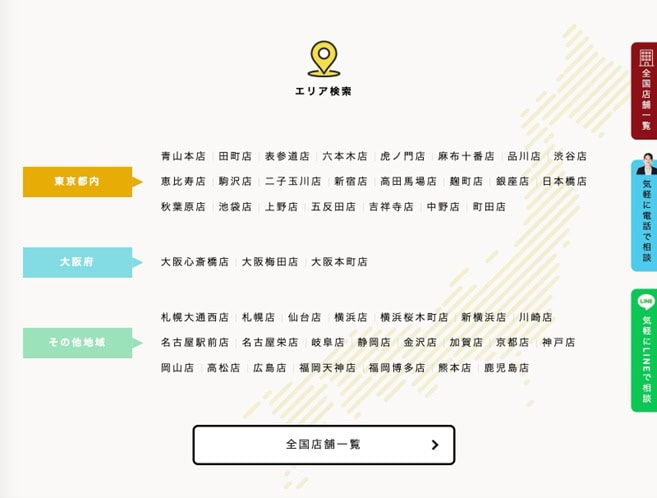
2 things to note.
- All locations are easy to click 2 or 3 character Kanji characters followed by the “store/shop” character (店).
- The Locations are separated into 3 areas (sort of)
- Also note the layers on a map in the background to make it easier to quickly find the location.
Here is a similar example for Shane English schools.
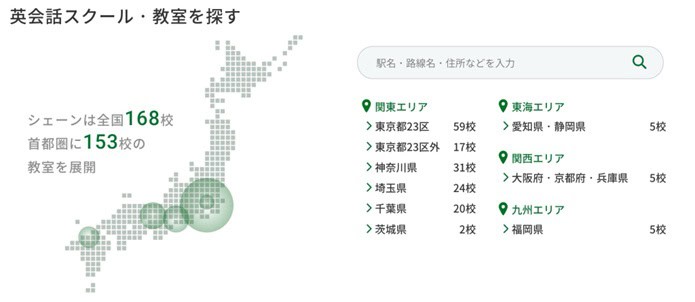
By overlaying locations on or near a map, it helps users find the best location with 1 or 2 clicks.
One may ask, what does this have to do with SEO? Here are 2 good reasons.
- Usability feeds back into SEO rankings. Users tend to favor sites that deliver what they are looking for up front.
- Those internal links on your homepage offer great internal “link juice”.
👉Implications for Search
If your business has 10 or more locations in Japan, consider creating a custom location picker overlaid on a map of Japan.
“Around Me” Local Searches
In English, “find a Thai restaurant around me” is a common search pattern. In Japanese, there is no common phrase for “around me”, so more often than not, they specify the actual location. This aspect has a significant impact on local search patterns. When creating a local site, you need to specify locations, including city, ward (“ku” or “shi), as well as common references (“cat street in Harajuku”). You should also list access from which train lines.
👉Implications for Search
Make sure all locations are clearly specified with appropriate local keywords.
Mobile Experience
The average commute time in Tokyo is 1 hour each way. That’s 2 hours per day. The trains are crowded, and so commuters are likely to be standing the whole way. Thus, the mobile phone becomes an indispensable device. In comparison to Western users, Japanese are much more likely to spend time on a mobile device.
As such, Japanese are more likely to browse and make purchase decisions on a mobile device. Japanese users routinely purchase Airline tickets, and other expensive items using a mobile phone.
Before entering the Japanese market, you may want to review and fix any outstanding mobile issues in your online presence.
Keep in mind Google has adopted a Mobile-first Indexing. So optimizing for mobile layouts will likely give you a benefit to all rankings.
External SEO
While many foreign brands focus on their Japanese website, contents, and technical SEO aspect. Many forget there are External SEO factors that are important. What are users saying about your brand in Japan.
There are a number of ways foreign brands to promote their brands with External SEO. Here we cover a few ways.
Backlinks & Mentions
Most SEO Experts still consider Backlinks as one of the top ranking factors. From our experience, this is also true in Japan.
Google’s “Penguin” link evaluation algorithms apply to Japanese websites and text as it does in English.
However, there are business and cultural differences in Japan that make getting backlinks or mentions much more difficult and expensive. We outline many issues in the Guide to Link Building in Japan article.
In October 2023, Japan updated its Stealth Marketing laws. Any paid links or sponsored references need to be tagged with “PR” or “Sponsored” tags on the page. Publishers that don’t comply could be subject to fines.
There are additional laws about Privacy that affect how outreach is done. There are also business cultural issues about outreach as well.
Finally, we find that Reciprocal Links is still a popular link building technique here in Japan. However in general we don’t recommend this strategy as it is against Google’s TOS, and your site could incur a silent link penalty in the next algorithm update.
UGC Sites
Just like Reddit and Quora & Stack Overflow in the US, many UGC sites have strong SEO metrics. When Google released its Helpful Content Update in 2024, sites like ITReview had notable gains around that time.
Google has clearly signaled that their algorithms can clearly distinguish between valuable content vs SPAM on these sites. So now UGC content ranks really well. As such, honest positive feedback on these sites will boost your SEO rankings in Japan.
A brand can help build authority and trust by helping & guiding others on these UGC sites.
Here are some examples of UGC sites in Japan.
- Gurunavi and Tabelog are sites for restaurant reviews.
- Cookpad is a recipe sharing site. Used by anyone who cooks in Japan.
- Pixiv is a website for sharing artwork, manga, illustrations, and graphic novels.
- 2Channel is a large anonymous text board. It’s the wild west, and anything goes here.
- Nico Nico Douga – is a Video sharing site.
- ITMedia – While more editorial, there are often user comments and contributions.
- Kaiten Portal (開店ポータル) is a site to announce new store openings.
Reviews
We have seen first hand in Japan the positive impact that reviews can have on local and brand rankings. In particular, we see a high correlation between Google Reviews and local rankings. It seems Google now trusts their review algos to decide what is an honest review, and what is not.
Having a good process for requesting reviews is essential for any location based business.
Social Media Promotion
Japanese respond to social media just like other audiences. Here are the top social media platforms in Japan.
- X (formerly Twitter)
- LINE
- Tiktok
- YouTube
While LinkedIn is used by Japanese who work for “Gaishikei” or global companies. Most Japanese who work for domestic companies do not use it.
Of course, promoting your brand on social media will inevitably create more branded searches, which in turn drives an improvement in rankings.
Japanese Domains
When registering a domain for your Japanese website, there are a number of things to keep in mind.
Japanese Domain Registration
When deciding a domain for your Japanese website, there are basically 4 choices.
- .jp Domain
- .co.jp Domain
- .com Domain (JP only)
- .com Domain (Multilingual)
Here I will discuss the differences.
.JP Domains
These domains are relatively easy to get. And Japanese users have the expectation that these websites are intended for Japan.
.CO.JP Domains
In order to obtain a .CO.JP domain, you need to have a registered Japanese company. Official documents will need to be shown as evidence. And domain registration costs more. However, the big benefit is Japanese users tend to trust these as “Corporate” domains.
.COM Domains (fully JP localized)
You can still have a fully localized website with a .com domain. There is some speculation that there might be some penalty, but we don’t believe that to be the case. Many Japanese companies, especially big brands, operate out of .com based websites.
.COM Domains (Multi-language websites)
Many overseas companies have a Japanese localized folder of their .com sites. Site like this can still build trust with Japanese users. However, site owners still need to make the extra step to provide trust and social proof that they are committed to Japan.
Domain Hosting
There are a number of domain hosting services in Japan. Most of these domain hosting services are difficult to use, and only provide support in Japanese.
For foreign companies, a global domain hosting service like GoDaddy or NameCheap is an acceptable solution for Japan.
2-Byte Domain Names
Some brand names have 2-byte domain names. This is done mostly for branding purposes. Most of these sites redirect to 1-byte domain names.
Example: https://www.fudousan-jinzai.com/ 不動産人材.com.
We don’t recommend doing this for your website. It just adds complexity for little value.
Japan SEO FAQs
Here we will attempt to answer some common questions asked by companies entering Japan.
- What is the Most popular Search Engine in Japan?
- The most popular search engine in Japan by far is Google. You can find more info in our Japan Search Engine Marketshare Article.
- Do most SEO Tools work in Japanese?
- Most keyword tools such as AHRefs, SEMRush & UberSuggest. Most website checker tools like Screaming Frog and Sitebulb work for Japanese as well. Some tools report wrong info about japanese “words”, which are hard to count or measure.
- Is Keyword Research in Japanese necessary if we already have an English keyword list?
- Yes absolutely. Just relying on translated keywords is a source for failure. Frequently, a popular keyword in English may be translated accurately to an unpopular keyword in Japanese.
- Do Japanese domains help with search rankings
- The common acceptance is yes, having a Japanese domain will help with your rankings. However, the difference is considered minimal when compared to other factors such as EEAT.
- Can I rank with a bilingual page, half Japanese and half in English?
- This is not recommended. Search engines tend to keep languages completely separate. It is better to have separate pages.
- Can I rank for Japanese SEO with Machine Translated text?
- Most likely not. While tools such as ChatGPT and DEEPL have improved translations considerably, most native Japanese readers can detect machine translated Japanese. And when they read this, they often question your brand’s commitment to Japan. So we do not recommend doing this for sales pages or blog pages.
- Can AI Generated text rank for Japanese SEO?
- In general, if there is a lot of competition for a particular keyword, you will not be able to rank with AI generated text. However, you may find some cases where you can rank with AI generated text for some longtail keywords.
- Are the costs to hire a Japanese SEO Agency the same as English or other popular languages?
- In many cases, the costs are comparable to Western markets. However, sometimes the Japanese market is unique enough, or there are legal issues that drive up costs. This is especially true with building links to working with influencers.
Final Points
Beware of local Japanese Local Competitors
When entering the Japanese market, many international firms tend to focus on their well-known international competitors. But many times we find small local competitors with better contents and a more user focused website. As a result, Google awards them with more organic search traffic.
Trust and Social Proof
Your brand needs to provide Trust. If users don’t trust your site, they will move on. Social Proof is another strong factor in Japan. Japanese people want to feel comfortable that other Japanese people are using and enjoying your product or service.
Translation is Not Enough
We have seen far too often where a Western brand tries to enter Japan with a poorly localized website and online presence. Just relying on translations is not enough to demonstrate to users you are serious about Japan. They will sniff you out and avoid you like the plague then complain on online forums or Twitter-X.
If you want to succeed in Search, you need to start out with a good SEO foundation, but then invest in additional customizations to provide a high quality Japanese experience. In this article, we have pointed out the most important places you will need to provide Japan local market knowledge to be successful.
Be Willing to Invest In Japan Specific SEO
To succeed in SEO, you can get 80% of the way with translations. However, not investing in the final 20% will lead to a poor experience, low search rankings, and underperforming business results. Be sure to allocate funds for this endeavor.
Good luck with your Japanese Search Rankings.
Looking for an SEO Agency?
If you decide you need professional help, please feel free to reach to Zo Digital Japan. We are a Tokyo-based SEO agency. We have helped many overseas and domestic companies be successful with SEO, Content Marketing and Link Building. More info about our SEO services can be found here.
Except for one of the tables above, this article was written by me without the assistance of Generative AI. Special thanks to Ken Lunde, Koichiro Harada and Yuka Fukuda.
Reference Articles
- CJKV Information Processing (2nd Edition) Book by Dr. Ken Lunde
- This is the definitive source on all things Japanese (Fonts, Typography, Storage, Unicode, etc)
- “海外SEO blog” by Kenichi Suzuki
- This is probably the most famous SEO blog in Japan. Over the years, we have found Suzuki-san’s blog to be really helpful to identify new SEO trends as they relate to Japan.
- Motoko Hunt Articles
- Motoko is Japanese who lives overseas. This makes her well qualified to discuss the differences between Japanese SEO and English SEO.
- https://www.ajpr.com/japanese-seo-what-different
- https://www.searchenginejournal.com/yahoo-japan-search-strategy/270231
- https://www.searchenginejournal.com/hidden-hreflang-challenges
- Masaharu Hayataki Articles
- Can’t find it. But he often has really good observations about Digital Marketing in Japanese versus English.
- SEO Article on Ulupa
- This is a good intro article for Japanese SEO. It also talks about some of the challenges and considerations.
- Scaling Japan
- This article has a nice contrasting of English versus Japanese sites
- Not so helpful to us, but perhaps helpful to others.
- JapanSEO.org Website
- This is no longer available, but can be found on the Internet Archive. This is what Japanese SEO was like in the old days.
- https://web.archive.org/web/20190305024734/http://japanseo.org
About the Author Jeff Crawford
Jeff Crawford is a Digital Marketing expert, technologist and Manager. He has worked for technology companies in Silicon Valley such as Apple, WebTV and Microsoft. He has lived in Tokyo Japan since 2004, working for companies such as Microsoft KK and Adobe Systems Japan. Jeff is founder of Zo Digital Japan, an SEO and Digital Marketing agency based in Tokyo. Jeff started the Tokyo Digital Marketers Meetup in 2016, which now has over 2000 members. He has also presented about Digital Marketing at such events as Ad-Tech Tokyo, WordCamp Tokyo, Japan Market Expansion Competition (JMEC), and the Japan Association of Translators (JAT).